Chapter H – Smith – Satan/ The Angel of death / “Yetser Hara”
Who is Neo's greatest enemy – and what has he come to teach him?
"His mission is to fight, but the completion of his role is to be defeated."
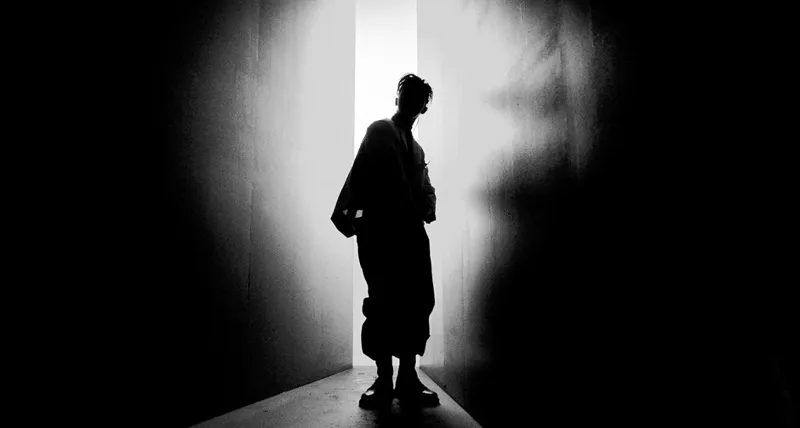
Chapter H – Smith – Satan / The Angel of Death / "Yetser Hara" – a portrait
Smith's character is perhaps the most important character in the film after Neo. At one point, the Oracle tells Neo that Smith is his mirror image – his negative. Smith's power grows and becomes stronger along with Neo's evolution ("Whoever is greater than his fellow – his evil inclination is greater than he"). Neo's war against Smith along his path of training forces him to exert himself and squeeze out of himself a bit more than the maximum he thinks he is capable of. Smith is at one and the same time the main hurdle preventing Neo from reaching his purpose, and the key with which Neo succeeds in fulfilling his destiny and stopping the war.
Just as Neo embodies all the souls seeking to awaken to the truth and to touch the "beyond", so Smith embodies the screen trying to hide that true world from the eyes of the souls, and by this to take away their purpose, their destiny. It is not by chance that the Wachowski brothers named him S"M-ith. Satan's name in the sources is S-a-m-a-e-l (ס-מ-א-ל), abbreviated S"M (ס"מ) – the angel whose job is to blind (lesamot, לסמות – to conceal) the eyes of the creatures from seeing God (the Force). His role is to make it hard for man to progress, in order to create a struggle out of which growth will come. However, his purpose is to be beaten by man. A proof of this is Jacob's (Yaakov's) struggle with Satan – Esau's angel: when Jacob beat him, the angel asked to be released, because his time had come to sing praise in Heaven. It is known that when an angel completes his mission, he goes up to sing praise. From this we see that his mission is to fight, but the completion of his role is to be beaten. Another example can be found in the Baal Shem Tov's parable of the King and the Harlot.
What is driving Smith? And what is the source of this driving force?
Several scenes in the film show us that Smith's basic ambition is to fill the world. He is so in love with himself that he wants everyyyyone to be just like him, and it makes no difference if as a result the whole world is destroyed together with him. Sounds familiar, doesn't it? There is a pattern in the human body that acts in the same way. The name of this pattern is cancer. Cancer occurs when a certain cell, for some reason, loses its sense of belonging to the whole to which it belongs – to the general management of the system in which it lives. Cells, it is true, have no eyes to see or ears to hear the whole body, or to understand and grasp its essence; but a healthy body is one in which each and every cell, although it does not grasp the picture of the whole, knows its place and its role within the framework of the entire system.
When one cell decides to become independent – an individualist; to decide for itself what and how much to produce; to decide for itself how many times to divide; to decide that it has an essence of its own, unconnected to the body to which it belongs – then the body has a problem. The cell does not see beyond itself and does not understand that its self-realization is ruin and destruction for the body, which will necessarily bring about its own destruction as well.
The body has to teach its cells that their self-realization is their recognition of their role and destiny within the system in which they live, even if they don't have the tools to fully grasp its essence and shape. The self-fulfillment of the heart is to move blood. The self-fulfillment of the stomach is to absorb food, and so on. Every part of the system has a role that only it can perform properly. This is its destiny, and this is its true self.
Smith's character comes to carry this knowledge over from the realm of the human body to the spiritual realm – to the understanding of the true essence of self-realization and purpose. Every person is a part of the complete whole of existence. Man does not have the tools to grasp the essence of the whole, since inside the Matrix he sees only finiteness and opposites; but his true meaning lies in understanding the relationship and connection between himself and the whole to which he belongs. In the Chinese Tao and in other holistic Eastern methods this is an iron rule: "The part has no meaning of its own, but only in the connection between it and the whole to which it belongs."
Smith thinks he has meaning of his own. What is important is "me, and me, and me". Moses our teacher passes the opposite message to the warriors of Zion in one sentence: "And I (Anochi) stand between the Lord and you." The teachers of Hassidism explain that its meaning is that what stands between the spiritual warrior and the Source of existence is the "Anochi" – the "I", selfishness. Nothing creates more distance than pride. The Sages bring that it is said of God that He "dwells with them in the midst of their impurity", but of the proud man it is said: "He and I cannot dwell together under one roof." Why? Because when a person thinks that he is something in his own right, he necessarily denies the truth that there is an infinite force filling the whole of creation, since there is then a part that the Infinite "as if" does not fill.
Every soul is in fact "a part of God from above" – a stone hewn from the mountain. At its source, every soul is still connected to the whole. Although the soul has been closed inside a digital/physical body, it still remembers the feeling it had when it was connected to the whole: a feeling of immense pleasure, fullness, unity and wholeness. This memory is the force that drives man in all his actions. He aspires to be whole again, to lack nothing, to fill the world and have the whole world be his. Everyone wants to be one with God again – everyone wants to be God. The difference between people is in the way they try to get back to this state. The material man thinks that by fulfilling his physical needs he will feel whole again – that if he rules the world and everything is his, he will feel again as he did then. This is Smith. He wants what Neo wants – everything; only his way of getting it is by enlarging the "I" and satisfying its needs. This path gives, at a given moment, an illusion of progress in the satisfaction of its momentary pleasures and a false fullness, but in the long run one discovers emptiness, regression and deterioration, until annihilation and the destruction of the whole system. The Sages describe this deterioration in the words: "A person does not die with even half of his desires in his hand – he has a hundred, he wants two hundred." The more a person enlarges himself, the more his lack grows and the emptier he feels.
Neo's way to the same goal is the opposite.
Neo teaches us that the way to immerse ourselves again in wholeness is by nullifying ourselves before the whole – removing the partitions of the "I" in order to be one with the Infinite. The part that understands that its purpose is devotion to the needs of the whole – of the system it is a part of. The summit of freedom and independence, deriving from the acceptance of authority. Neo's becoming "the One" passes through his self-sacrifice (mesirut nefesh) and his willingness to sacrifice himself for the truth and for Zion. In his test before the Architect, too, Neo is measured by his devotion to the collective – to Zion – when he refuses to accept the offer to start a new Zion from him. (Moses our teacher had a similar test, when, as a result of the story of the Golden Calf, God wished to start a new people from him; Moses refused and said that if He does not forgive the people of Israel, let Him erase him from His book which He has written – from human history.) For a material man, society exists so that he will have someone to climb on, on his way to a feeling of self-identity and satisfaction. For a warrior of Zion, society exists so that he will have someone to help, on his way to a feeling of self-identity that derives from living according to an inner spiritual system of values. In the Jewish tradition a person is obligated twice a day to arrive at the recognition that the whole world is one infinite unity, in which all the different phenomena and details that exist are nullified. Among all the details, one's personal selfhood is also nullified, since everything is one. This is why, in order to arrive at this recognition, a person must be willing to give up his soul (mesirut nefesh) – to give up his selfhood. The verse said at that moment is the Shema (Kriat Shema), whose meaning is that all the forces in creation – all the "Elohim" (forces) – derive from one Source that fills all existence: the Name י-ה-ו-ה.
Giving up the "I" is not total nullification, but a passage to the recognition of a true self-importance deriving from the acceptance of the mission and of the special role I am supposed to perform for the entire system of creation – for the Infinite.
Neo teaches us that self-sacrifice (mesirut nefesh) is not only a willingness to die for an ideal. True self-sacrifice is a willingness to live for an ideal: to give not only the last moment of life, which is after all only one moment, but to give each and every moment, out of a life of strenuous work of discovering points of truth in a world of lies.
The flaw of selfhood and pride begins with the creation of the world. In the books of Kabbalah, creation is described as the withdrawal of the infinite unity from a central point, in order to allow a space that is vacant of the unity – a space that enables multiplicity, a space in which there is room for a finite reality. The moment the whole concealed itself, the moment the King disappeared, all the creatures rose up and each one wanted to be the king.
The sin of the first man (Adam HaRishon) – eating from the Tree of Knowledge – was also connected to the flaw of selfhood and pride. Knowledge (Da'at) means connection. The Tree of Knowledge of good and evil means a tree in which good and evil are connected and mixed. The snake told the first man that if he ate from the tree he would be able to create worlds like God. World (Olam) means concealment (He'elem) – hiding – illusion. It is as if the snake said to him: now it is no problem to find the truth – you see it and hear it; but if you eat from the tree, you will bring the evil into you, you will enter another concealment, another world that hides the truth – and if you find it from there, that will be called a challenge, and then it will be possible to say that you really did something. The first man wanted to do more than he was asked, out of a desire to prove himself, out of a feeling of selfhood. This is why the work of repairing this flaw is through devotion and sacrifice.
For the sources of this page, click here >>
To continue to the next chapter – Chapter I, “Dream” – click here >>